Transylvania County is called the Land of Waterfalls for a reason: 250 of them are scattered across the county, with Brevard in the middle as the county seat. Getting to a good number of those falls, or a trailhead, or a fishing spot, means leaving pavement and spending a while on gravel.
That changes what you should be shopping for when it is time for new tires. It is one of the most common conversations we have with drivers buying tires in Brevard NC, from folks in town and out toward Cedar Mountain to visitors driving over from Hendersonville and Asheville. Most tire advice for mountain driving turns into a debate about tread patterns: highway versus all-terrain versus mud-terrain, with pictures of aggressive blocks and deep voids. For the driving people actually do around here, that debate is beside the point. Washboard gravel and loose rock do not chew up tread. They cut sidewalls.
So this guide picks gravel road tires a different way. Two things matter more than the tread picture on the sticker: how much casing is under the rubber, and whether the tire is carrying the right air pressure. Get those wrong and the most aggressive tread on the shelf will still leave you changing a wheel on the side of Forest Road 475B.
Why Gravel Damage Lands on the Sidewall, Not the Tread
A tire is really two structures. The tread face is thick rubber over steel belts, built to be run over sharp things for tens of thousands of miles. The sidewall is thin rubber over fabric cords, built to flex. It bends and springs back with every rotation, which is why it cannot be built thick.
Now think about what a gravel road does to a tire. The tread meets rock lying flat, pressed into the roadbed. The sidewall meets rock standing on edge along the shoulder, rock kicked up by the vehicle ahead, and the sharp lip of a rut. It also gets squeezed: roll over an embedded stone at low pressure and the sidewall can be pinched between that stone and the wheel flange.
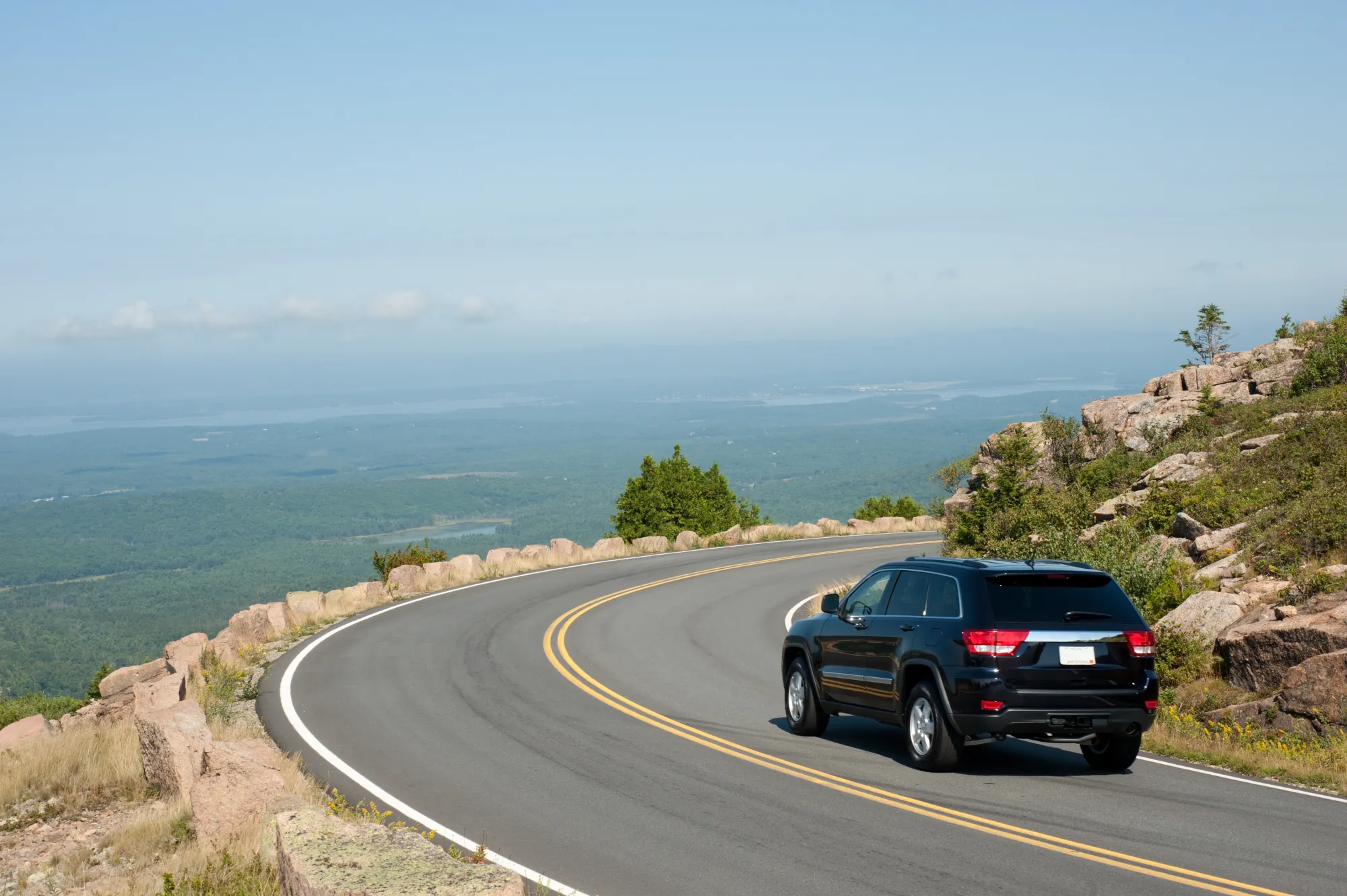
Pisgah’s forest roads are the textbook case. Forest Road 475B, the road up to Headwaters, is a narrow gravel logging road with frequent switchbacks that asks for cautious driving. Narrow means real time spent within inches of the shoulder, where the loose material and broken edges live. Add every waterfall pullout and gate in DuPont State Recreational Forest and that is a lot of mileage on the part of the tire least able to take it.
The surface is not a constant, either. Pisgah closes forest roads seasonally, generally through winter and early spring, because freeze-thaw cycles soften the roadbed and traffic tears it into deep ruts. The gravel you drove in August is not what you find right after a gate reopens.
The Repair Rules Are Narrower Than Most Drivers Think
Here is the part that surprises people. A punctured tire is not automatically a repairable one, and the industry rules leave a shop very little room.
According to the U.S. Tire Manufacturers Association, a repair is limited to the tread area. The guidance is blunt about the boundary: do not repair where the injury extends into the shoulder or belt edge area, or where it runs at an angle into the shoulder. The injury has to be no greater than a quarter inch, or 6mm, across, and repairs on one tire cannot overlap.
The method is spelled out too. The tire has to come off the wheel so the inside can be inspected. A rubber stem, or plug, fills the puncture channel, and a patch seals the innerliner. Both halves are required. In the association’s own words, a plug alone is an unacceptable repair, which rules out the roadside plug kit as a permanent fix.
Michelin publishes the same criteria and adds two disqualifiers. A tire driven on while flat does not qualify, because the casing is already damaged, and neither does one at or below its legal wear limit.
A Sidewall Cut Is a Replacement, Not a Repair
Put those rules next to where gravel damage happens and the problem is obvious. Tread punctures are usually fixable. Sidewall injuries are not.
Michelin states the case in one line: the damage must be only on the tread section of your tire, because sidewall damage ruins a tire immediately. That is not a technician being cautious. The sidewall is a moving, load-bearing structure that flexes with every rotation to absorb road shock, and no patch survives that cycling.
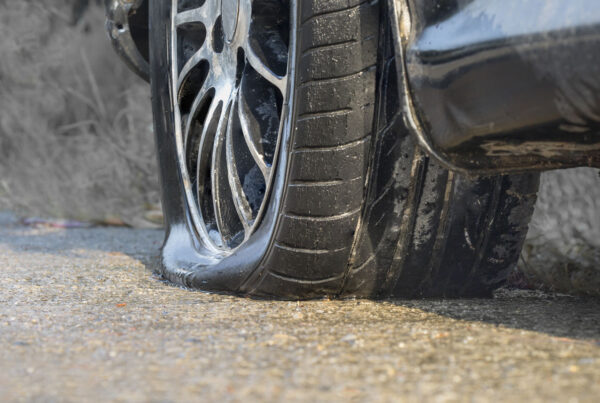
This catches people out because sidewall damage often does not look serious. A driver picks up a shallow cut low on the sidewall, notices it a week later, and finds the tire has been holding air the whole time. It still cannot be repaired, because the injury sits outside the repairable area. Our post on the top causes of flat tires and how to prevent them covers the punctures that can be fixed.
The pinch case is even less obvious. A hard squeeze between rock and wheel flange can leave the rubber looking untouched, and then a bulge shows up days later. Michelin says a bulge like that generally indicates cords damaged by a severe impact, usually with a visible break in the inner liner and air working its way between the plies. The rubber is intact. The structure underneath is not. Michelin’s advice is to fit the spare immediately and have the tire inspected, because a bulged tire cannot be repaired.
Around here, a tire is more likely to be lost to a sidewall injury than worn out.
Load Range: The Spec Most Buyers Skip
Once you accept that the casing is where the risk lives, the shopping question changes. Instead of asking which tread pattern is toughest, ask how much structure the tire has. The spec that answers that is load range, the letter near the size on the sidewall. It is the modern version of the old ply rating, and the two map straight across: A equals a 2-ply rating, B equals 4, C equals 6, D equals 8, E equals 10 and F equals 12. The letter is shorthand for how much reinforcement is layered into the tire.
The LT marking is related. It stands for Light Truck, and those tires start at a 6-ply rating and go up, where passenger tires sit lower. A higher load range carries more weight, which is why heavier load ranges are recommended for vehicles that tow or run loaded.
This is where local driving deserves a conversation rather than a default. A heavier casing is not free. It rides firmer, weighs more, and does no favors for fuel economy, so on a small crossover that mostly commutes, moving up can be the wrong trade. On a truck or SUV hauling bikes, coolers and passengers up a gravel road most weekends, the casing is doing real work. Our post on hauling bikes and gear to DuPont and Pisgah covers what a loaded vehicle does to the rear axle, and load range is the tire side of that equation.
What it takes to move up a load range depends on your size, your vehicle and what is built in that size, so it is not something we can put a number on in a blog post. Ask us for a current quote on the size you run and we will lay the options side by side.
The Pressure That Is Right for US 64
Air pressure is the other half of this, and it is free. It also gets misread constantly. The recommended pressure for your vehicle is on the label on the driver’s door jamb or in the owner’s manual, and the guidance is to check it at least once a month.
The catch is the word cold. Pressure is meant to be read cold, meaning the vehicle has sat at least three hours. Check right after driving back from a waterfall and the tires are warm and reading high. Bleed air out to hit the placard number in that state and you are genuinely low by the next cold morning.
Weather moves the number too. Pressure shifts roughly one to two pounds for every 10 degrees of temperature change, which is no footnote in the mountains. A cold October morning in Transylvania County can sit well below the warm afternoon when you last set pressure, so every tire reads low before any air has actually leaked. That is why our lot in Brevard fills with pressure warning lights the first cool week of fall.
What That Pressure Does on Loose Gravel
Now take an underinflated tire onto gravel. Low tires flex more and build heat faster, which is the mechanism behind a lot of blowouts, and they wear quickly along the edges. Extra flex also pushes the sidewall further out on every rotation, closer to the rock you are driving past, which makes a pinch easier to trigger.
Drivers sometimes air down on purpose for a softer ride on washboard. That works, but it comes with a chore most people forget. Air down for gravel comfort, then drive home on US 64 at highway speed well under the placard number, and you are heat-cycling a flexing sidewall the whole way.
Do not count on the dashboard to catch it, either. A tire pressure monitoring system typically alerts you once a tire is 25% under inflated, and that is a lot of missing air. A tire can be low enough to wear its edges and run hot with no light at all. A gauge in the glovebox is the better early warning.
Reading Your Own Tires After a Forest Road Trip
The habit worth building is a two-minute walkaround after any trip that included gravel, before a slow leak turns into a flat in a parking lot.
- Run your eyes and a hand along both sidewalls of all four tires, inner face included where you can reach, looking for cuts, gouges and anything resembling a bulge.
- Check tread depth. The minimum is 2/32 of an inch, about the height of a penny, and every tire has built-in wear bars that come flush with the tread surface when the tire is done.
- Look for uneven wear, high and low spots, and unusually smooth patches. Edge wear in particular often means the tire has been running low.
- Set pressure cold the next morning rather than while the tires are still warm from the drive.
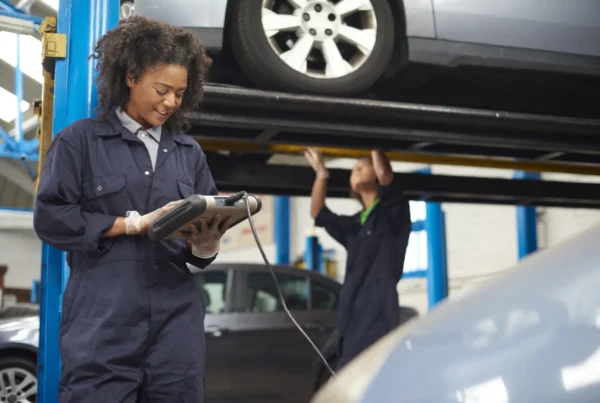
Anything you find on a sidewall is a stop-and-ask question, not a wait-and-see one. If you are not sure whether it matters, bring it by the shop. Tread and tire condition also get looked at during the annual safety inspection every Transylvania County vehicle owes, so it is worth asking while the car is already on the lift.
Choosing Gravel Road Tires for a Mixed Week
The buying decision comes down to being honest about your mix of miles. Most people here drive far more pavement than gravel. The gravel is where the damage happens, but the highway is where the miles are, so the tire has to behave on US 64 as well as hold up on a forest road. That points to casing strength, correct sizing and a load range matched to how you actually load the vehicle, rather than the most aggressive tread on the wall. Start by browsing what fits your vehicle on our shop for tires page.
What drives the cost is the same short list every time: your tire size, the load range and construction you choose, what your vehicle takes, and how much life was left in the tire when damage showed up. Those vary far too much between vehicles for a number in an article to mean anything, which is why we quote per vehicle. Tell us what you drive and we will give you a current quote, or request a quote online and we will come back with real numbers for your size.
Come See Us in Brevard Before the Next Gravel Trip
If you are shopping for tires in Brevard NC, or you came back from Pisgah or DuPont with a sidewall you are not sure about, let us take a look. As a local tire shop in Transylvania County, we work on vehicles that see these roads every day, from daily drivers on US 64 to loaded work trucks running gravel. We would rather set you up with the right casing and pressure than replace a tire cut on a shoulder last weekend.
Schedule an appointment and we will inspect your tires, talk through the load range that fits how you drive, and give you a current quote before anything gets ordered.